Slept relatively late – 7:30 or so – as I stayed up to late
the night before. Was too tired to
finish writing about the days event the night before, so finished up in the
morning. Must be rambling too much, as I
didn’t finish until almost 10:30, just in time to quick pack and check out by
11. As I was taking some pictures of the
Landing where I stayed, Gary and his dog stopped by to talk.

Gary is an immigrant to the community of
Guttenburg, from the Milwaukee area. He
and his ex-fiancé stayed at the Landing themselves a few years back and fell in
love with the area – when he retired, they bought a house, then they broke up,
and he stayed. He told me about foolish
people he has scene do stupid things on the river with their speed boats. One example was of people running through the
gates on the lock and dam, with they are wide open to high river stage to avoid
having to lock through. The other was of
people hitting wing dams with their boats.
After hearing that story, I had to come clean with my story about how I
learned about wing-dams.
I told him how I had
built a wooden row boat and after finishing it, I talked my wife into trying
out island camping with me for our anniversary.
Not knowing too much about a wing dams at the time, I was motoring along
the shore of the river looking for a camping site on the islands south of Genoa
near the Bad Axe River. All of a sudden
I hit the rock structure with my plastic prop, and sheared it off the
motor. My wife jumped out of the boat
walking along the wing dam in hopes of finding the broken prop. Needless to say she never found it, but we
rowed to an island, camped for the night, and then rowed back to the boat
landing the next day. And also needless
to say, my wife has never camped on an island with me since.
I also talked some with him about my trip experiences and he
gave me the name of a book called THE RIVER WE HAVE WROUGHT and told me it was
about the history of development, and uses and abuses of the Mississippi River
from the Twin Cities to St. Louis. I
told him I would add it to my books to read list. He then told me that if I ever made it back
to town to stop by and see him. His is
the only house of the 400 block.
Heading out of Guttenburg, I stopped at the visitor’s center
to see if they had any good maps of this part of the State. I was just using the Iowa State Highway map
which didn’t have much detail. I found a
few and started collecting them, and then wondered what I would do with my Northeastern
Illinois Map collection. I also started
thinking about how limited maps are in communicating information about what
experiencing a place is really like. A
flat two dimensional collection of some lines, colors, and a few words is
pretty meaningless when it comes to experiencing the multisensory,
multidimensional, multitude of experiences that places contain.

And then I passed the town's schools that were built alongside
the river with a nice view of the lock and dam.
It was nice to see for a change prime river front property devoted to
children, rather than profit. As I
passed the playground, recess must have just started and loads of grade school
kids began pouring outside, running and jumping, throwing balls, yelling and
laughing – that was kids in their natural environment or at least outside. As I stopped in the park next to the
playground, I continued to notice the activities and that there was a chain
link fence surrounding the playgroun – although fortunately there was no barb
wire strung across the top of it. The
ground in the pavement was covered in pavement, and instead of trees to climb,
there were multicolored metal structures for the kids to climb, and
manufactured swings for them to play on.
I liked to hope that the excitement the kids demonstrated was doing to
being outside, not fenced in on a paved area with unnatural equipment to burn
off some energy on.
I worried that the
way we kept our children confined, was not too much different from how we
confine our livestock – and that by treating them that way, we break them from
the connection they have to the natural world – so we can put them back in the
class room and get them to be able to sit in a desk and focus for hours at
a
time – when instead they should be spending their days playing and exploring
nature. While in the park, I also used
the City’s park restroom facility and it was the nicest City park restroom I
have had the pleasure to use – it was very clean, modernly equipped, and smelt
like someone had been burning nice smelling incense in.
It was probably around noon, and time for me to move on when
I encountered a group of preschool age kids out for a walk along the path on
top of the dike that ran north of the school.
I pulled my bike over to let them pass and as I waited, a boy looked at
my bike and then asked me why I had all that stuff on my bike? I replied without thinking about it that I
couldn’t leave home without my stuff, but later thought more about his
question, and wondered why did I have so much stuff? I suppose it made me feel safe to have all my
stuff.
I had the following clothes: 6 pairs of shirts, 2 biking
shorts, 2 regular shorts, 5 pairs of socks, 4 pair of underwear, a pair of
gloves, a stocking cap, a pair of sweat pants, a sweat shirt, one long sleeve
shirt, rain coat and paints, helmet, two sets of biking gloves, a reflective
vest, biking shoes, and an extra pair of shoes. I had my eyeglasses, a pair of
sunglasses, a pair of clear lenses glasses, an extra pair of contacts, a bottle
of contact cleaning solution, Breathrite Strips to keep me from snoring, deodorant,
shampoo, conditioner, a small bar of soap, hair gel, shaving cream and a razor,
tooth brush and toothpaste, suntan lotion, fingernail and toenail clippers,
Chapstick, a container of wetwipes, one large towel, one washcloth, and two
sets of dental floss dispensers. I had
my one person tent, a sleeping bag, a sleeping pad, and a stuff able
pillow. For food I had about 3 each of oranges and
apples, salted nuts, dried fruit, about 10 granola bars, a bag of mixed
vegetables, a couple small bags of sunflower seeds, and probably a few other
items. I had a small first aid kit
containing an ankle wraps, assorted band aids, a few asprin, some Tums, a small
scissors, a small sewing kit. For books
I brought along George Orwell’s 1984 and Alfred North Whiteheads ADVENTURES OF
IDEAS (which has not been opened so far) along with a guide book to biking the
Great River Road, along with a small and large note book, two pens, and a
pencil. I had state highway maps for WI,
IL, IA, and MN. I had picked up several
other maps along the way. I had two head
lights for the bike, two tail lights, a reflective triangle to hang from the
back, a headlight for my head, a camera, an Ipod, cellphone, and a 15” laptop. For bike tools I had a set of Allen wrenches,
a multipurpose tool, a small pair of clippers, a set of tire changing levers, a
chain cleaning brush, chain lubricant, degreaser, all-purpose lubricant, and a
small bag of rags for cleaning. I had to
spare inner tubes and a foldable bike tire.
And I had my wallet, plus a collapsible kitchen sink. And I am sure there was some other stuff I
forgot to mention. And when I think
about it, probably half of this stuff – well maybe a quarter of it – never got
used so far. So why did I bring so much
stuff?
I headed out of town with all my stuff, passed the towns
veteran memorial, a fairly large covered marina for the large boats to harbor
and it’s two above ground fuel tanks to hold the fuel to keep the boats
running, the pump station to pump the local creek over the flood dike, the
large homes perched on top of the bluff overlooking the town, and then traveled
along the road next to the railroad tracks that headed North.

Along the railroad tracks I noticed all the
large trees that had been encroaching on the tracks had been whacked off with
some type of equipment. They were large diameter
trees, and the remaining stumps were broken off anywhere from four to eight
feet off the ground, with the top of the tree simply pushed off to the side of
the tracks and left to rot. It got me thinking again about how we treat nature,
it’s fine as long as it keeps its distance from our stuff, from what is
important to us, but as soon as it gets in our way or encroaches on us, or
makes us feel uncomfortable – we invent some new technological device to whack
it back, to kill it, to remind it who is in charge. We don’t seem like it too much when it whacks
back and reminds us who is in charge – for example when things like really big
tornadoes wipe out towns – then we really don’t like it.
And then the River Road verged to the left and up a huge
hill to the top of the 500’ or so tall bluff and the railroad verged to the
right to follow the lower river valley floor.
And then I was climbing that hill and working up a profuse sweat. I had to stop and take off my one long-sleeved
shirt, and then put it back on again when I got to the top of the hill to keep
from getting cold. It was a cloudy
cooler day again.
The road ran along the ridge tops again, to the land of
large farms. The terrain was quite steep
and erosion must be a problem on some of the fields. Corn seemed to be the predominant crop to
plant, and I stopped for a lunch break near one corn field and stepped out to
admire the corn seedlings that were an inch or two high and planted in neat row
after row. The clay soil stuck to my
shoes and I had to stomp my shoes on the concrete paving to
unclog the cleats
on my shoes so they would not plug up my peddles and prevent my shoes from
clipping into my clip-less peddles.
So I
re-clipped myself to the bike and proceeded to pass the Pleasant Ridge one room school house on
which the sign out front indicated taught the children of the ridge from 1893
to 1954. I wondered who kept the
building up all these years and if it was just kept up for display
purposes.
Then there was the Willie Quarry – a purveyor of limestone,
a horse farm – with a donkey and a ewe and her lamb perched behind her lying on
a black plastic tarp, followed by the Pattison Sand Company – and the semis
that haul the sand from the mine to probably back down to the river where it is
loaded on to rail-cars or barges for shipping someplace else. And with the increased truck traffic the
concrete road that had been in good shape now began to show the wear and tear
that comes along with truck traffic.
Passing by a white house, I noticed two American flags draped vertically hanging down
from the entry porch – the red, white and blue stuck out like two sore thumbs
on the white house. White smoke could be
seen rising from the bin located in the field next to the house, and the smell
of burning garbage filled the air.
Then on my way down the hill to Paradise Valley I noticed
some small earthen dams with orange drain tiles placed in front of them located
throughout a steep farm field. The
purpose of the dams must have been to try and slow the water down and capture
the soil that ran off with it. And then
rising up from the floor of the Valley was a large limestone face that had been
carved away in the quarrying process through the years. And perched high on top of what appeared to
be a new section of freshly cleaned off limestone where the vegetation and
overburden had been removed in preparation for expanding the quarry was another
American flag blowing in the breeze.

I
crossed the bridge over the stream that runs next to the quarry and through the
valley, and noticed how gray/green it was – kind of like a broth that had gone
bad. And then I began climbing the hill
up and out of Paradise Valley, and I began thinking about heaven and hell. As I was about half way up the hill, I
figured that this hill must be hell, or at least purgatory – and I wondered
what I had done to deserve such punishment.
And then I reached the top of the hill and paused to rest and wipe the
sweat from my brow wondering if I had reached the promised land – but the old
rusty farm equipment and Jeep truck abandoned in below the farmstead next to
the highway told me I had further to go.
Panic also set in when I pulled my Ipod from my pocket and noticed the
near the headphone plugins, the vinyl sheath protecting the speaker wire was
worn – as all headphones I have ever owned – and I have owned a lot do. I wondered why our high tech industries could
not come up with a connector that didn’t fail – but then I realized that that
might put a serious crimp in the sales of headphones. My panic receded when I recalled the roll of
black electrical tape (one of the things I forgot to mention in my list of
stuff I brought with me earlier), so I proceeded to pull it out and reinforce
the connector. A white cow and her calf
watched me as I paused and made my repairs and then proceeded to pass them
by.
On the left side of the road appeared a small white church with a cemetery
behind it. The small church did not look like it was used any more, probably
because the steeple size was small and location of the church was such that it could not be scene for many
miles away. And then up the road a
little ways on the right was another much larger steeple free church that was
still in use.
The sky got darker,
and I began to worry about storms and rain, and decided to pull off in Pikes
Peak State Park to figure out if I should plan on staying there for the night –
even though it was only 3 pm. I toured
the campground and noticed a group of four or five matching tents with a sign
in front of them that Americorp volunteers were working at the campground.
I rode out to the end of the park with an overlook over the
river valley and talked with a park ranger and park store host to find out if
they knew what the weather was supposed to be – rain showers were expected and
I learned they had a weather radio playing in the campground restroom. I wasn’t sure if I should stay, or if I
should go. I felt guilty for stopping
early and not getting many miles in, I felt guilty for having all my camping
gear with me and having spent the last 4 nights in motels and hotels and
spending all the extra money – perhaps all the churches I had passed were
instilling my conscious with guilt. But
then again, I was starting to enjoy spending time in doors at night. It saved me time setting up and taking down
my stuff at night, and it allowed me to experience some interesting inns. I was torn on what to do.
The camp store had a blue tee shirt hanging outside the
store that caught my eye – it was $15 which compared to the $3 used one I bought at
Salvation Army Store in Onalaska on my downstream trip was quite a bit, but as
far as new tee shirts go seemed pretty reasonable.
However, the price of an electric campsite was also $15 and I was down
to about $27 and some change in cash – the store didn’t take credit cards
either. I opted to increase my stuff and
buy the shirt. After purchasing the
shirt the store host asked me if I needed any other information - after she swatted some gnats and mosquitoes
away from my head. I asked her what the
meaning of life was. She looked at me
kind of funny, and then with some further explanation from me on what I meant
she thought for a moment and replied – “to find happiness within”. That seemed like some good information to
remember I told her, especially when I am biking up long steep hills with all my
stuff.
I still was not sure whether to spend the night at the campground
or not, so I stopped at the campground restroom to listen to the weather radio
while I swallowed some granola bars to fend off my hunger pains. The mechanical weather man was not too
helpful as he read off the predicted river stages up and down the river, so I
stepped outside to fill my water bottle and the gnats began swarming my head
again. The idea of spending the night in
my tiny tent to avoid the bugs and or the rain did into seem inviting. So I slipped on my rain coat to keep the
cold and sprinkles that start to fall at bay, and headed down the hill to the
town of McGregor. I zipped down the big
hill into town, and passed the first motel I came to on the outskirts thinking
there might be something better in the downtown area – closer to the
river. And I came to the downtown – an attractive
downtown as downtown river towns go – with the typical reddish brick 3 story
building and store fronts lining the road down to the river.
And then I saw a sign for the Alexander Hotel and Mexican Restaurant. I walked into the bar and restaurant and
noticed some men sitting at the bar eating Mexican food, and I asked the bar
tender – a young lady with a pierced tongue – if they had rooms available and
if so how much they were. She began
explaining the various room options to me and their prices, and it seemed like
I could find one option that would keep my price under $60 for the night – a bit
high, but after making her go through all the details I felt like I should
stay. I also asked about the ability to
bring my bike upstairs. The Hispanic gentlemen
sitting at the bar wearing a red Wisconsin baseball cap that spoke up and asked
me what type of bike it was – a motorcycle or a bicycle? I told him, and then he gave me a tour of the
first floor of the complex that he was in the process of remodeling and showed
me several rooms where I could stow my bike.
He also showed me a place out back I could lock the bike up.
I decided to take the room – after all the
hospitality I was shown I figured it was the least I could do. As I registered, I asked the man who had shown me around
where he was from as he didn’t have a south eastern Iowa accent – and he
proudly point to one of many flags displayed on the walls from Central and
South American Countries and said Peru.
I assumed he must be the owner of the establishment. He also told the bar tender to give me the
$52 rate
 on the room with the queen size bed and bathroom in the room, which is
what they typically charge for the single bed room with the shared
bathroom. He took me upstairs and told
me he was in the middle of putting the window air conditioner in the room, and said
he would be done in a few minutes, so I began unloading my stuff to set up shop
for the night. After taking a shower in
the old claw footed bathtub with the improvised shower system – I headed
downstairs for some Mexican food.
on the room with the queen size bed and bathroom in the room, which is
what they typically charge for the single bed room with the shared
bathroom. He took me upstairs and told
me he was in the middle of putting the window air conditioner in the room, and said
he would be done in a few minutes, so I began unloading my stuff to set up shop
for the night. After taking a shower in
the old claw footed bathtub with the improvised shower system – I headed
downstairs for some Mexican food.
I asked the bartender/waitress why the owner did not serve Peruvian
food at the restaurant. She explained
that when he first started up the business – he did have several Peruvian
dishes on the menu, but they did not sell too well. She explained that the owner would on occasion
make some of the dishes and I asked her how they were. She said that the meat is often guinea pig,
and she was not real fond of it herself as it was on the tough side. She said that being a local hunter who
believes in eating what she hunts she has tried many things including raccoon and
opossum, but she preferred beef. She
also told me she grew up across the river in Prairie du Chien. And she told me about her adventure hunting
cougars. I asked her if she had done
that out west, and she explained that it was actually on the Canadian
border. When I asked if that was in
Northern MN, she said no – Wisconsin. I
started to think that she may be embellishing her hunting adventure story – but
decided to just accept her tale of adventures hunting animals that could hunt
you back at face value, and didn’t ask her how the hunt went. I appreciated her taking the time to make me
feel welcome and her entertaining stories. After polishing off the vegetarian enchilada
and large bowl of homemade chips and salsa that were all delicious, I headed
back up to my room, where I came across the owner who was wrapping up his maintenance
duties for the day.
He asked me about bikes and told me he would like to get one
and was wondering what kind to buy. I advised him that I was no expert on the
subject, but told him my philosophies on the subject and told him I could do
some checking on the internet and give him a list of brands I would consider if
purchasing a lower cost used bike, in lieu of buying a cheap new one from Wal-Mart
as he was considering. We also reviewed the ins and outs of the
various types of bikes from mountain to cross to road to touring. He told me he was a tennis player and played
tennis on Tuesday nights. I also asked
him if he missed Peru, and he said he missed his family and friends, but that
he had many friends here. He had a wife
and two high school aged daughters who lived in Decorah Iowa which was about 50
miles away. He spends several days a
week at the Hotel in McGregor and several in Decorah with his family.
Later in the evening while I was sitting outside trying to
write up my days adventures he sat down and we talked some more about bikes and
other things. We also talked about the challenges
he has had in trying to learn the hotel and restaurant business, dealing with
bankers, lawyers, architects, insurance agents, and all the other complications
that go with running a business. I found
his concern for his employees quite interesting. He mentioned that in the winter time business
drops off a lot, but he doesn’t lay off his crew, because he wants to keep the
people he trusts employed. He talked
about how when he started up the restaurant he learned how to cook from the
cook he hired, and how he also took lessons from a Peruvian chief in
Madison. He has hopes of one day opening
up a restaurant that serves Peruvian food.
He also told me that he is a pilot and can fly airplanes
and helicopters. He became a pilot in
Peru where he flew for American petroleum companies, and he also did some
commercial flying while he lived here, but the commitments took him away from
his family too much. That is in addition
to work he has done as an electrician, plumber, and HVAC worker. We also talked about his religious believes –
he said he was not a religious man, but he definitely was a man with a faith
the guided his actions to treat people right.
He liked the fundamental principles behind the Ten Commandments – to be
honest, to honor your parents, to not kill – and he also like the Our Father prayer
with its focus on forgiveness, and paying attention to daily needs, not long
term wants. And then

he headed back to
Decorah, as his wife was expecting him home for the night and I went up to my
home for the night as well. I had been disappointed that I had only gone 19 miles that day, and that I took the cushy choice of staying indoors rather than in a tent - but the conversations and stories I heard from the people I met reminded me that it was a very good day.


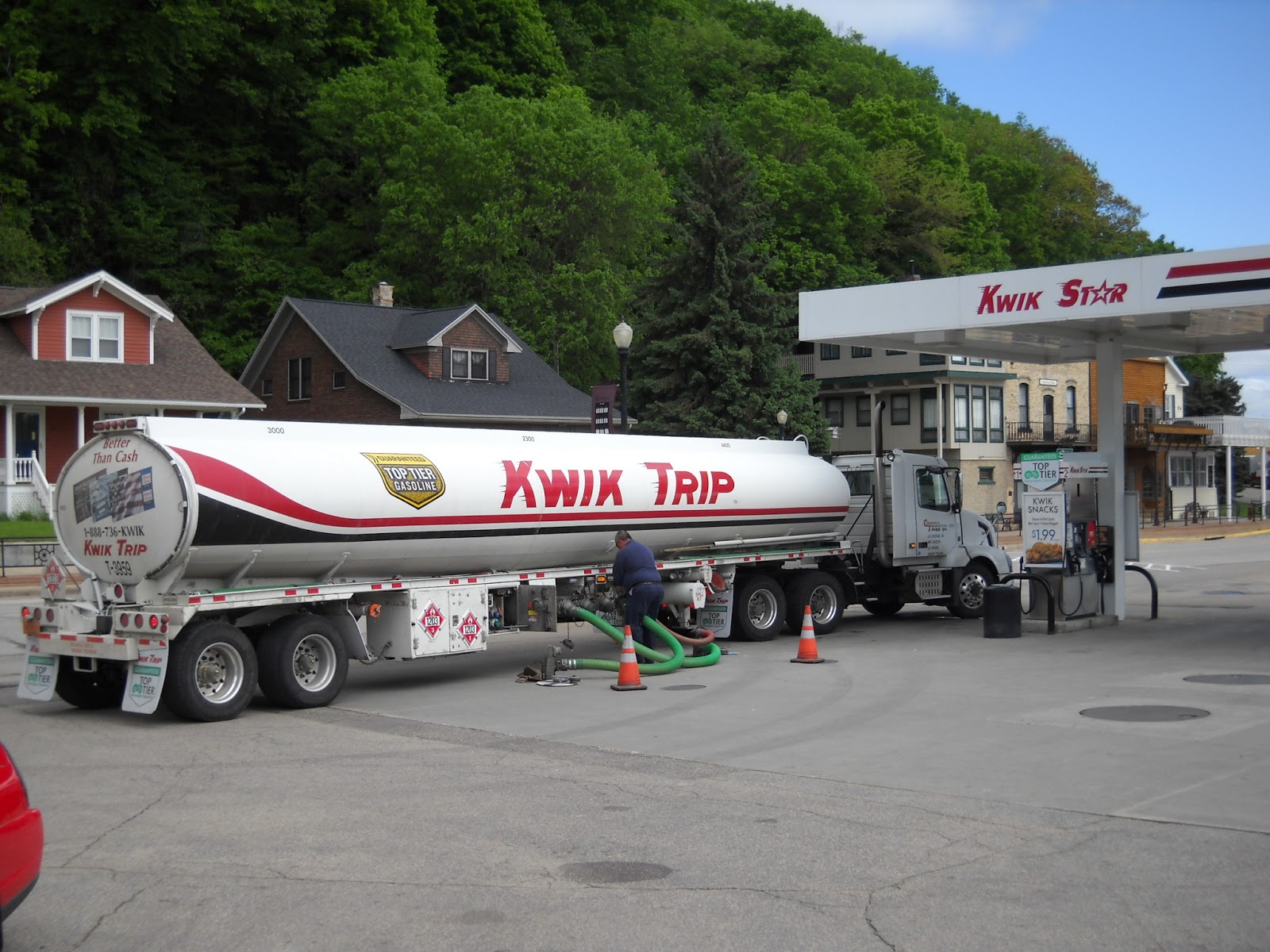
 Off to the Kwik Star I went, for some cash, a banana, some
OJ, and chocolate covered rice crispy bar to feed my latest addiction
craving. While eating my brunch, I
watched the Kwik Trip tanker unload probably 6 thousand gallons or so of $3.99
gasoline. And then I headed out of
McGregor, passed the old grain elevator that had been replaced with the new and
larger concrete ones up river, and entered its twin City Marquette – home of
another river boat casino and headed back up the river squeezed between Highway
76 and the Canadian Pacific Railroad tracks.
Off to the Kwik Star I went, for some cash, a banana, some
OJ, and chocolate covered rice crispy bar to feed my latest addiction
craving. While eating my brunch, I
watched the Kwik Trip tanker unload probably 6 thousand gallons or so of $3.99
gasoline. And then I headed out of
McGregor, passed the old grain elevator that had been replaced with the new and
larger concrete ones up river, and entered its twin City Marquette – home of
another river boat casino and headed back up the river squeezed between Highway
76 and the Canadian Pacific Railroad tracks. 


 Heading along the road I passed another interesting old
abandoned farmstead, and then headed up the hill and noticed a series of animal
tracks – perhaps coyotes – that had walked along the old concrete road, before
the concrete had set. The tracks become
fossilized and would likely be around a million years from now when some future
folks would ponder what kind of animal had made them and how the strange flat
rock laid down in ribbons up and down the hills and valleys were formed and by
whom.
Heading along the road I passed another interesting old
abandoned farmstead, and then headed up the hill and noticed a series of animal
tracks – perhaps coyotes – that had walked along the old concrete road, before
the concrete had set. The tracks become
fossilized and would likely be around a million years from now when some future
folks would ponder what kind of animal had made them and how the strange flat
rock laid down in ribbons up and down the hills and valleys were formed and by
whom. 


 Lansing was also not too far from the
Minnesota border, so if I could pick up the pace I would soon be back in my
home state, and for incentive I began racing a tug pushing a work barge upriver. Then I passed the Corp of Engineers working
station on the river, with a couple of artesian wells spilling water into a
side bay to the river. I pulled into
Lansing around 3 or 4 where I stopped at the town park for a quick rest stop
and water break – watched the local school baseball team jog around the field
before practice – with one large youngster breaking out in a walk as he trailed
the rest of the pack.
Lansing was also not too far from the
Minnesota border, so if I could pick up the pace I would soon be back in my
home state, and for incentive I began racing a tug pushing a work barge upriver. Then I passed the Corp of Engineers working
station on the river, with a couple of artesian wells spilling water into a
side bay to the river. I pulled into
Lansing around 3 or 4 where I stopped at the town park for a quick rest stop
and water break – watched the local school baseball team jog around the field
before practice – with one large youngster breaking out in a walk as he trailed
the rest of the pack. 

 Then it was under the old blue painted unique to Lansing
steel truss bridge over the main channel of the river and into the countryside
through the river valley. Then I heard
and passed another man out mowing his large lawn on his large John Deer riding
lawn tracker, with matching John Dear Tractor mail box located beside the road
in front of his lawn. Then across the
Upper Iowa River and through the large flood plain farm fields where farmers
had abandoned the practice of raising cows and instead the cash crop of corn
and in the process they also
Then it was under the old blue painted unique to Lansing
steel truss bridge over the main channel of the river and into the countryside
through the river valley. Then I heard
and passed another man out mowing his large lawn on his large John Deer riding
lawn tracker, with matching John Dear Tractor mail box located beside the road
in front of his lawn. Then across the
Upper Iowa River and through the large flood plain farm fields where farmers
had abandoned the practice of raising cows and instead the cash crop of corn
and in the process they also 


